
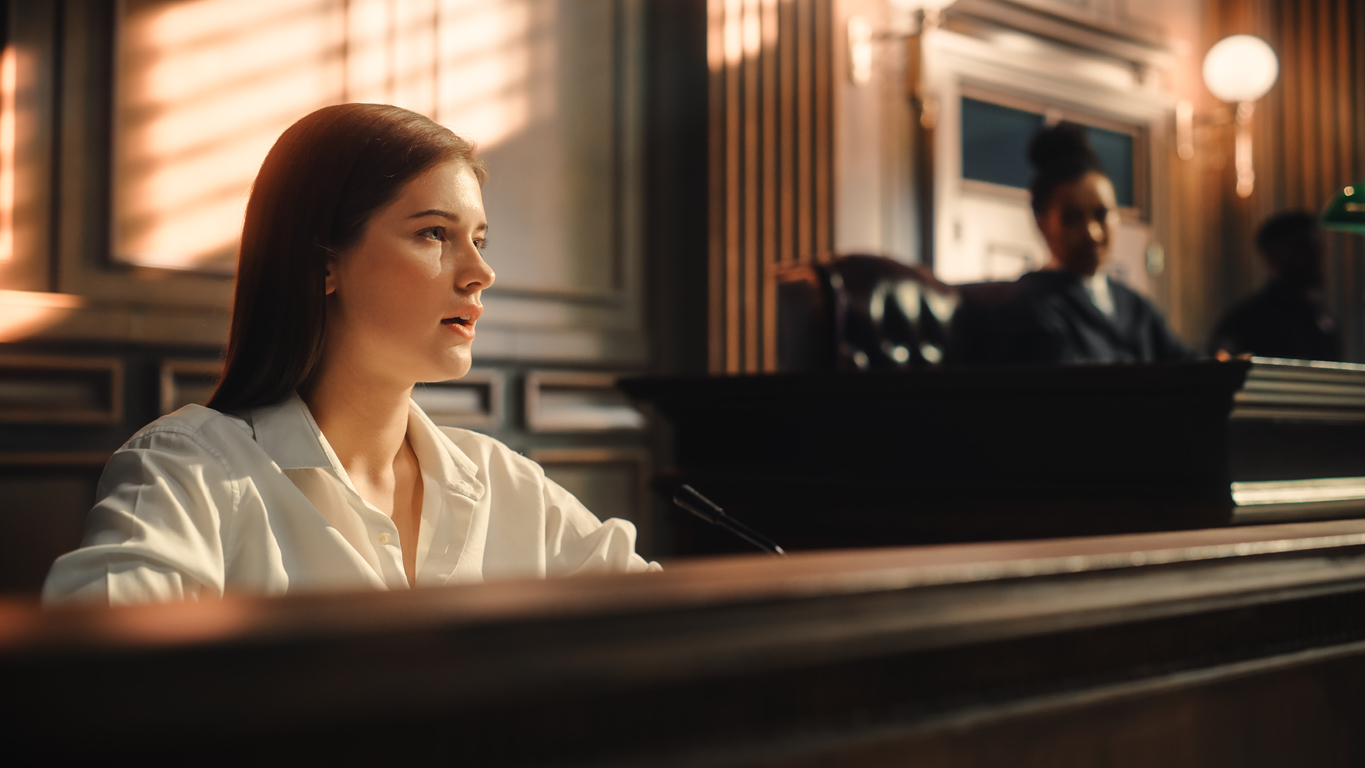
Artificial intelligence is changing nearly every industry, and the criminal justice system is no exception. San Diego criminal defense attorney Peter Blair recently spoke with NBC 7 San Diego about a concern that legal professionals across the country are beginning to take seriously: the use of AI to create, alter, or fabricate evidence in criminal proceedings.
The implications for anyone facing criminal charges in California are significant, and understanding how AI intersects with the legal system is becoming increasingly important.
What Did Peter Blair Say on NBC 7 San Diego?
In an April 2024 segment, NBC 7 San Diego reported on the growing threat of AI-generated evidence in courtrooms. Peter Blair, a San Diego criminal defense attorney, was featured alongside University of San Diego law professor Dr. Orly Lobel, who has been researching how artificial intelligence could be used to manipulate the legal process.
Blair acknowledged that the possibility of AI-fabricated evidence entering courtrooms is not just theoretical; it is likely already happening.
“That’s a little more scary, I think,” Blair told NBC 7.
While Blair recognized the unsettling nature of this technology, he was equally clear about the ethical boundaries that remain in place for attorneys: “Obviously, you have a duty to your client to present the best case possible, but your duty to your client does not trump your duty to be fully open, truthful and candid with the court.”
You can watch the full segment on NBC 7 San Diego’s website.
How Could AI Be Used to Create Fake Evidence?
AI-generated media, commonly called deepfakes, are videos, images, and audio recordings that appear real but were created entirely by a computer. In a criminal case, this technology could theoretically be used to produce a false alibi or fabricate proof that a defendant was somewhere other than the crime scene.
Dr. Lobel described a scenario in which AI could generate a timestamped video placing a suspect at a different location at the time of an alleged offense. The AI can learn a person’s face, replicate their movements, and insert them into footage they were never actually part of.
“The technology itself does not have bounds,” Dr. Lobel said.
This creates serious challenges for judges, juries, and defense attorneys who are responsible for evaluating whether evidence is genuine.
What Are the Legal Implications for Criminal Defendants in California?
For individuals facing criminal charges in California, AI-fabricated evidence raises several important concerns:
Evidence authentication becomes more complex. Courts have long required that evidence be authenticated before it is admitted, meaning a party must show that a piece of evidence is what it claims to be. But existing authentication standards were developed before AI-generated media became widely accessible. As deepfake technology improves, distinguishing genuine footage from AI-generated content will become harder without specialized forensic tools.
The risk of wrongful conviction increases. If fabricated evidence goes undetected, defendants could be convicted based on footage or recordings that never accurately captured what occurred. This is especially concerning in cases where surveillance video, cell phone recordings, or digital communications play a central role.
Defense attorneys must scrutinize digital evidence more carefully. A competent San Diego criminal defense lawyer needs to examine not only what digital evidence shows, but whether that evidence can be verified as authentic. Engaging forensic experts to analyze digital files may become a standard part of building a defense.
Can AI Also Help the Defense?
AI in the courtroom is not exclusively a threat to defendants. The same technology that could be misused to fabricate evidence can also serve legitimate purposes that benefit the defense.
AI tools can be used to:
- Analyze large volumes of digital evidence quickly
- Detect inconsistencies in video footage that may indicate tampering
- Assist with transcription of recorded proceedings
- Help identify patterns across documents and case files
Dr. Lobel described the situation as “a little bit of a cat and mouse game”, as AI tools become more capable of generating convincing fake evidence, detection technology is also advancing.
What Is Being Done to Address AI-Generated Evidence?
In 2023, President Biden signed an executive order directing AI applications to embed invisible digital watermarks in AI-generated content, markers that a computer could later identify as machine-made. The goal is to create a technical mechanism for distinguishing real content from AI-generated output.
Courts are also beginning to grapple with how existing evidentiary rules apply to AI-generated materials. The admissibility of AI-generated evidence, and the standards for challenging it, remain an evolving area of law.
For defendants in California, this means that the legal landscape surrounding digital evidence is shifting, and having an attorney who stays current on these developments matters.
What Should You Do If Digital Evidence Is Being Used Against You?
If you are facing criminal charges in San Diego and prosecutors intend to use video footage, audio recordings, or other digital evidence against you, you have the right to challenge that evidence.
A skilled criminal defense attorney can:
- File motions to require authentication of digital evidence
- Retain forensic experts to analyze whether media has been altered
- Challenge the chain of custody for digital files
- Argue for exclusion of evidence that cannot be reliably verified
The fact that AI-generated content is becoming harder to detect makes early and thorough review of the evidence against you more important than ever.
Schedule a Free Consultation With a San Diego Criminal Defense Lawyer at Blair Defense Criminal Lawyers Today
AI is changing the way evidence is created, presented, and challenged in criminal cases. If you are facing charges and have concerns about the digital evidence being used against you, speaking with an experienced San Diego criminal defense attorney is a critical first step.
For more information, please contact the San Diego, CA criminal defense attorneys at Blair Defense Criminal Lawyers for a free consultation. Give us a call at (619) 357-4977, or visit our convenient location.
We proudly serve San Diego County and its surrounding areas.
Blair Defense Criminal Lawyers San Diego
225 Broadway Suite 1750
San Diego, CA 92101
(619) 357-4977
24/7